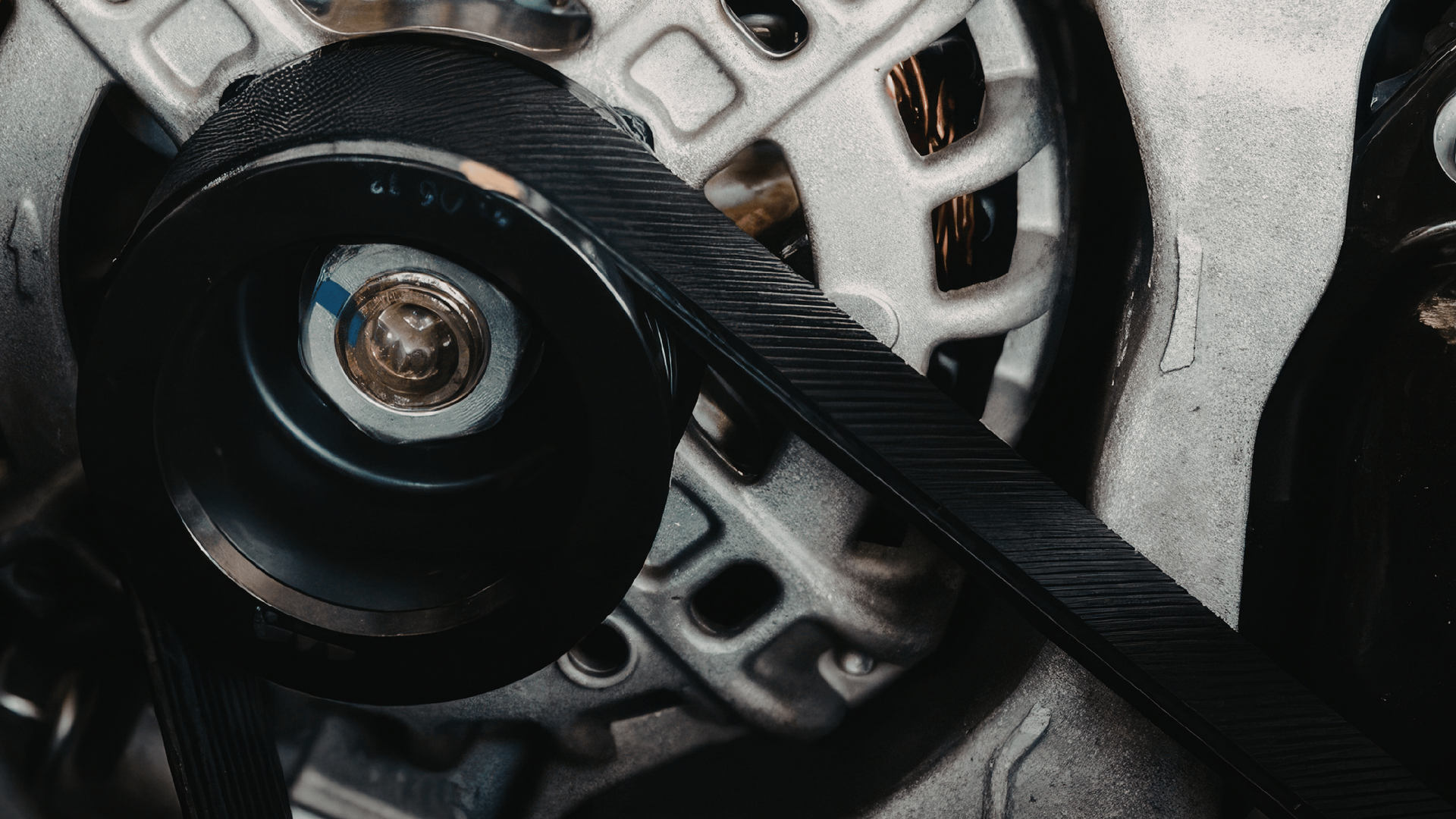
Why a slipping belt (even one that isn't squealing) could be the real reason your car isn't charging.
If your car isn’t starting or the battery light pops up on the dashboard, it’s easy to assume the issue is either a dead battery or a failing alternator. But what if you just replaced your battery?
The alternator plays a key role in your vehicle’s electrical system by generating power while the engine is running and helping keep the battery charged. So, it’s a fair assumption that if the battery is still good, the alternator may not be doing its job…right?
Not necessarily.
At our shop, we often find the culprit isn’t a dead battery or a failing alternator, but rather the “quiet hero” behind the system – the serpentine belt.
The Job of the Serpentine Belt
For your engine to run properly, many different components have to work together. When even one part isn’t functioning as it should, it can affect the entire system.
At the center of it all is the crankshaft, which generates rotational power as the engine runs. But that power doesn’t stay in one place, it needs to be transferred to other key components. That’s where the serpentine belt comes in.
The serpentine belt acts as the link between multiple systems, transferring power from the engine to components like the alternator, power steering pump, and air conditioning compressor.
As the engine runs, the serpentine belt spins the pulley on the alternator, allowing it to generate electricity. This powers essential systems like your lights, radio, and A/C – while also keeping your battery charged.
Silent Signs of a Failing Serpentine Belt
Typically, a failing belt is associated with a loud “squealing” noise. While that can be a warning sign, it’s not always a reliable one.
Modern serpentine belts are made from durable synthetic rubber, which tends to wear differently than older belt materials. Instead of cracking or breaking apart, they often become smooth or “glazed” over time. As the belt wears, it can lose thickness and grip without making much noise.
This loss of grip can cause the belt to slip on the alternator pulley, reducing its ability to spin at the proper speed. When that happens, the alternator may not generate enough voltage to fully charge your battery which creates a quiet issue that can lead to bigger problems if left unaddressed.
Since you may not have the noise to rely on, here are some other signs of a “slipping” charging system:
- Dimming Lights: If your lights dim or brighten as you brake or accelerate, the belt may be slipping at lower RPMs, affecting how consistently the alternator produces power.
- Heavy Steering: In many vehicles, the serpentine belt helps drive the power steering pump. If you notice a stiff steering wheel along with a battery warning light, the belt could be the cause.
- Slow Charging: A consistently weak battery (even if it’s relatively new) may indicate it isn’t receiving a full charge from the alternator.
How Precision Tire and Auto Center Can Help
At Precision Tire and Auto Center, we take a thorough approach to vehicle inspections and catch small issues before they turn into costly repairs. When it comes to your serpentine belt, we look beyond visible cracks. We also inspect belt tension, the condition of the tensioner, and the grooves of the belt to ensure it maintains proper grip and alignment on the pulleys.
If you think your serpentine belt may be wearing out, or if you have another concern you’d like checked, trust our ASE-certified technicians to get the job done right.
Give us a call at 623-263-2331 to schedule your appointment today.