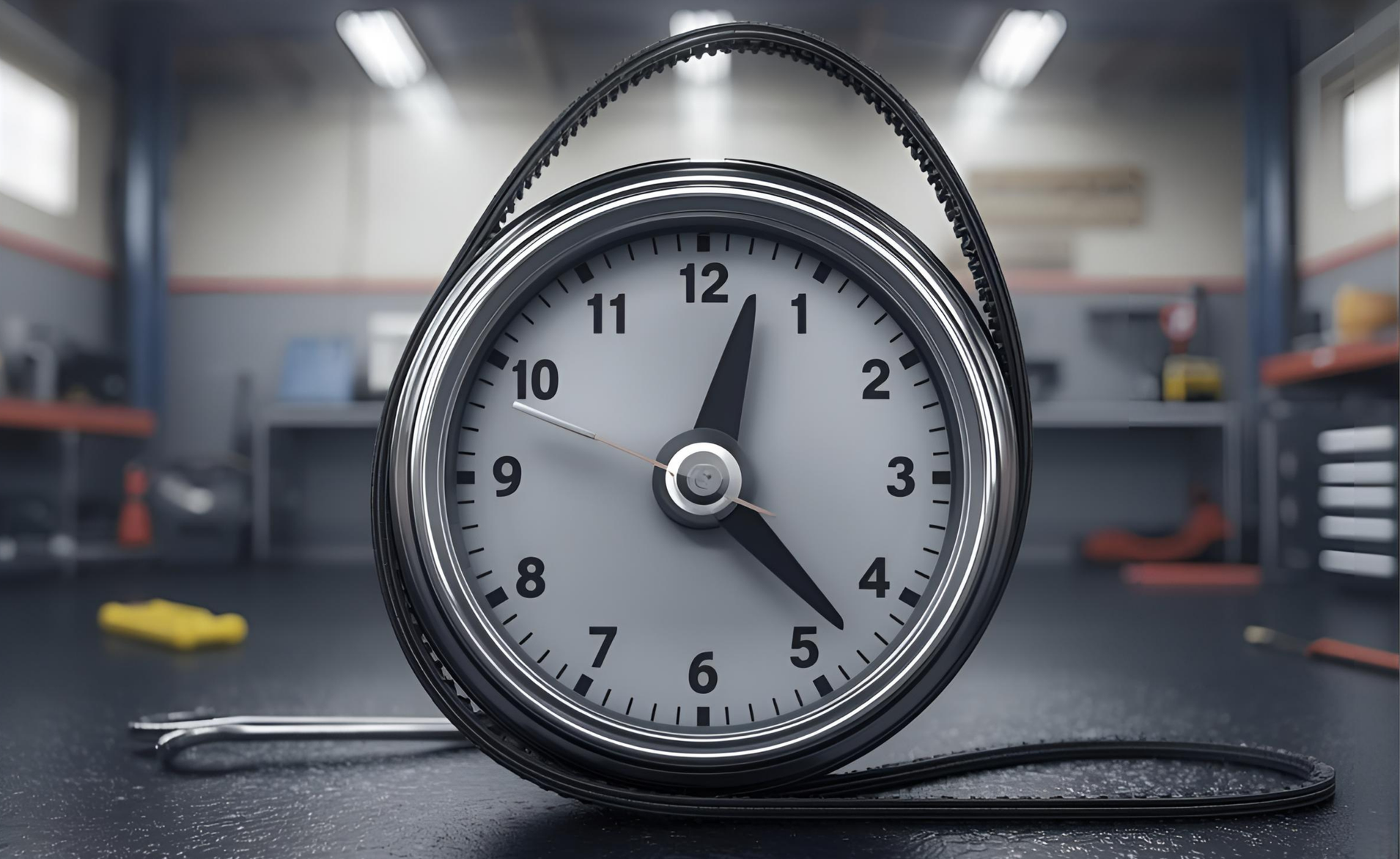
Avoid costly engine repairs by learning the warning signs, mileage guidelines, and maintenance tips for your vehicles timing belt.
Most drivers often overlook the timing belt, but the truth is, it’s one of the most important components in your engine compartment. If it fails, it can lead to serious, and often expensive damage. It is important to know what your timing belt does and when it needs to be replaced to avoid engine trouble and empty pockets down the road.
What is a Timing Belt?
The timing belt is exactly that – a rubber belt with great timing! Its main job is to time the engine’s camshaft and crankshaft so they can work together as one, ensuring your engine’s valves open and close at the right time while the pistons are moving. Without the timing belt, your engine won’t run properly.
Why Timing Belts Need Replacement
Since timing belts are made of rubber, they are subject to heat, friction, and age. Over time, it will weaken, crack, or stretch, which can cause severe damage to your engine if it snaps. It may not seem like a big deal, but if it does end up breaking, it can sometimes require something as drastic as a full engine rebuild or replacement. With that said, timing belts usually wear out silently, so it is important to monitor it to reduce the chance of a costly repair.
Common Signs Your Timing Belt is Worn
When timing belts don't always give clear warnings, here are a few red flags:
- Ticking noise from the engine – often caused by the belt wearing down.
- Engine misfires – if the belt slips, it throws off engine timing.
- Oil leaking in the front of the motor – oil can break down the belt material.
- Difficulty starting the car – a failing timing belt can prevent the engine from turning over.
When Should You Replace a Timing Belt?
Most manufacturers recommend replacing the timing belt every 60,000 to 100,000 miles. The exact interval depends on your vehicle’s make and model, so it’s always best to check your owner’s manual or ask a mechanic. A good mechanic will always do an inspection on your vehicle when you go in for your regular maintenance service, so they will be able to catch any issues early. Remember, preventative maintenance is significantly cheaper than repairing an engine after a belt failure.
Timing Belt vs. Timing Chain
Some vehicles use a timing chain instead of a belt. Chains are made of metal and often last longer, but they still require maintenance. If you’re not sure which your vehicle has, your repair shop can quickly let you know.
Protect Your Engine at Precision Tire and Auto Center
Replacing a timing belt may not sound urgent, but it’s one of the smartest maintenance steps you can take. At Precision Tire and Auto Center, we’ve seen firsthand the damage caused by neglected timing belts, and we’re here to help you avoid it. Our certified technicians can inspect your vehicle, check manufacturer recommendations, and replace your timing belt before it ends up costing you.