A Look at the Air Intake System and How Airflow Affects Power, Fuel Economy, and Engine Health
Your engine is a complex mechanical system, but when it comes down to the basics, it only needs three things to run: fuel, spark, and air.
Air? That’s right – air. Many drivers think about the ignition spark or the fuel that keeps their vehicle moving, but the air your engine breathes is just as important. Without the right amount of clean air, your engine can’t run efficiently.
Air Intake Assembly: A Precision-Engineered System
Your vehicle’s breathing system is more than just the cabin air filter; it’s a full assembly of components that work together to supply the engine with clean air. This system is known as the air intake assembly, and it plays an important role in helping your vehicle maintain power, efficiency, and smooth performance.
To put things in perspective, for every gallon of gas your vehicle burns, it would need about 10,000 gallons of air. That’s a significant amount of airflow required just to keep your engine running. Because of this, the air intake assembly acts much like a snorkel for your vehicle, pulling in air while keeping dirt, dust, and debris out.
Air Intake Assembly Anatomy
There are four crucial components to your vehicles air intake assembly:
- The Air Box & Filter: This piece traps Arizona dust and debris, essentially cleaning the air before allowing it to enter the engine.
- The Mass Air Flow (MAF) Sensor: This senor monitors exactly how much air is entering the engine. If this sensor goes bad or gets dirty, it’s unable to optimize the air-fuel mixture, leading to a decline in overall vehicle performance.
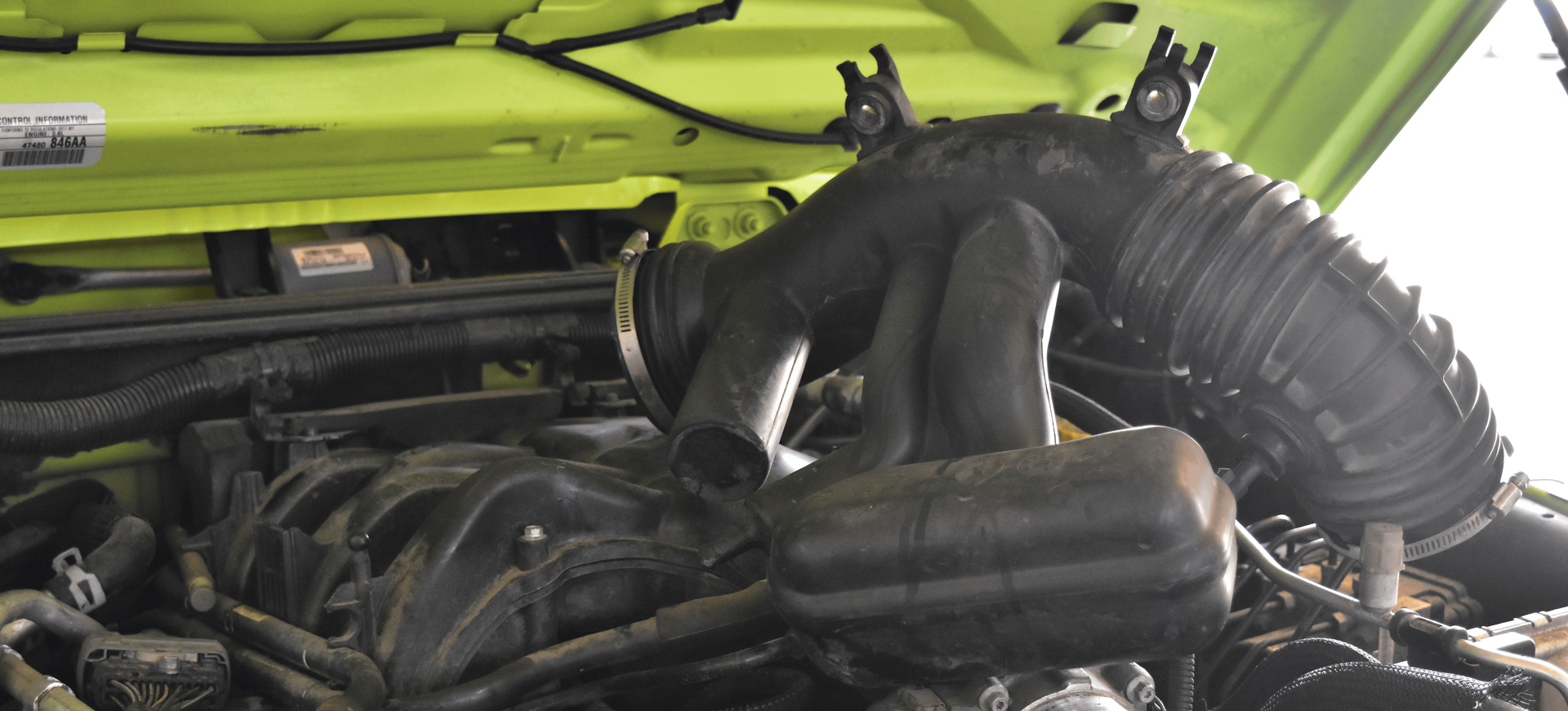
- The Intake Boot (Bellows): A long, flexible tube that connects the air filter housing to the engine, guiding clean air into the engine for the combustion process.
- The Throttle Body: This valve acts as the air “gatekeeper”, allowing more or less air to enter depending on how much you press the gas.
What Happens When the Intake Fails?
Since your air intake assembly is designed to be a sealed and controlled environment, any outside air interference can throw the whole system off. This could be caused by leaks, cracks, loose connections, or damaged parts that allows unfiltered air to enter the system.
So what happens if your air intake system losing its integrity?
- Loss of Fuel Economy: If the computer detects additional, unauthorized air entering the system, more fuel enters to compensate, which lowers your MPG.
- Rough Idling and Stalling: Large leaks in the system allows for unmetered air to enter to the engine, which disrupts the air-fuel mixture causing hesitation, rough idling, and/or stalling.
- Performance Lag: Your vehicle may limit its performance if it notices any abnormalities to protect the engine and prevent serious damage.
- Harsh Transmission Shifting: In modern vehicles, the mass airflow sensor helps to determine engine load for the transmission. Leaks in the intake boot or hoses can cause incorrect readings, leading to harsh, delayed, or clunky shifting.
How Precision Tire and Auto Center Can Help
Your air intake assembly is a lesser-known component in your vehicle, but is essential for smooth performance, fuel efficiency, and long-term engine health. Having regular inspections done can catch small issues – like leaks, cracks, or dirty components – before they turn into costly repairs, can keep your engine running at its best.
If you’re ready to schedule your appointment with our ASE-certified technicians, give us a call at 623-263-2331 today!