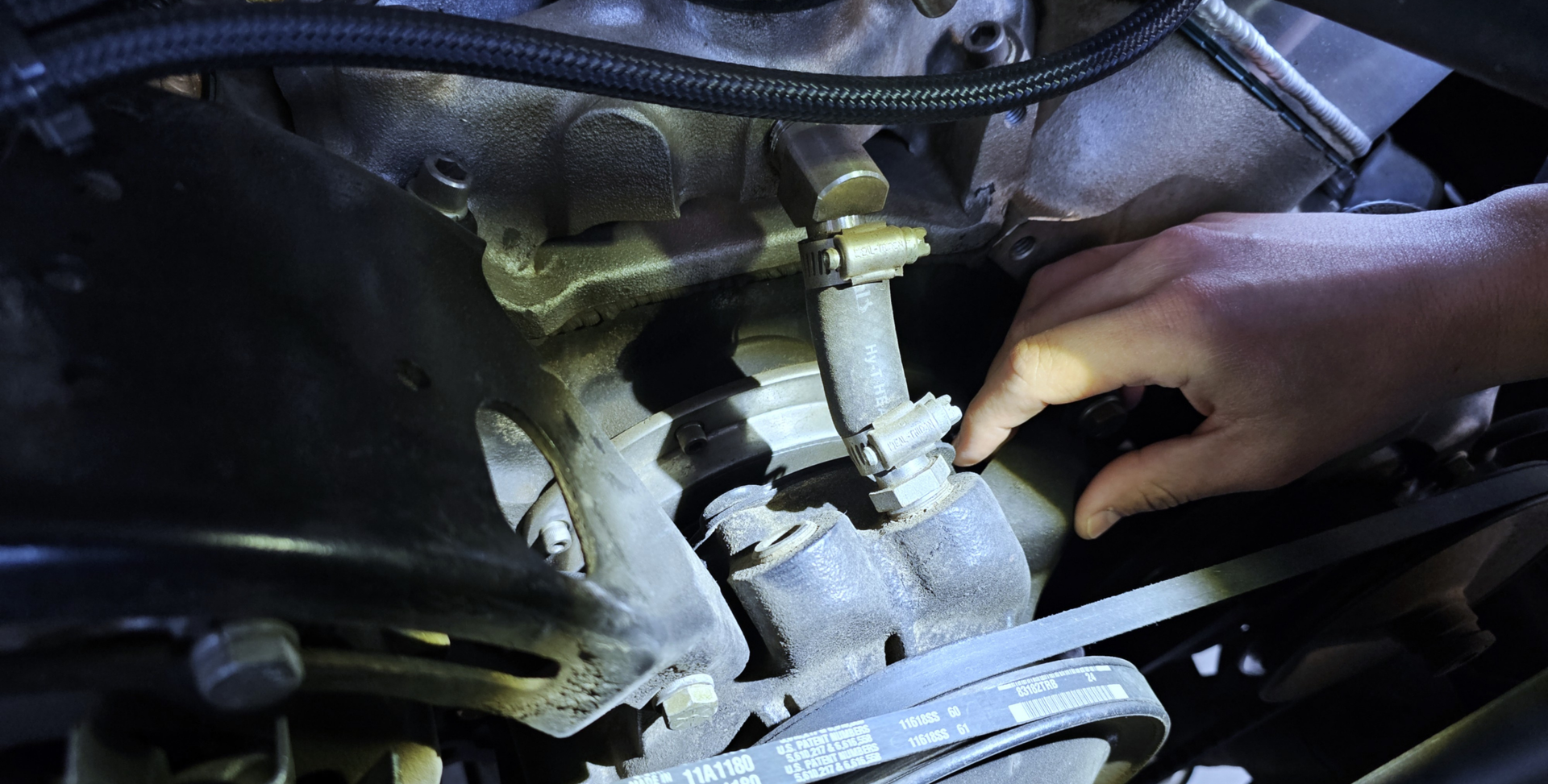
Why ignoring cooling-system problems can lead to engine failure, overheating, and expensive repairs.
Your water pump works hard under the hood to keep coolant moving through the engine, preventing it from overheating, and protecting its internal parts against extreme heat. When your water pump starts to fair, the warning signs may not seem like a major issue, but ignoring that odd noise, small coolant leak, or random temperature spike can lead to serious and expensive consequences.
What Your Water Pump Actually Does
The main purpose of the water pump is to circulate coolant through the engine block, hoses, and radiator to keep temperatures under control. It is a vital component of your vehicle, and when it isn’t working properly, your coolant stands still, temperatures begin to rise, and your engine starts to suffer.
Signs Your Water Pump is Going Bad
Watching for early warning signs can help you determine when it’s time to replace your water pump. Even subtle symptoms can signal that the pump is on its last leg, so it’s important to stay alert for anything unusual. Common warning signs include:
- Coolant leaks near the front of the engine
- Grinding or whining sounds coming from the pump area
- Engine running hotter than usual
- Steam or a sweet smell under the hood
- A loose or wobbly pulley
- Repeatedly low coolant levels
What Happens When You Keep Driving with a Bad Water Pump
1. Rapid Overheating
A failing water pump can stop circulating coolant, causing the engine to overheat quickly, sometimes in just a few miles. High heat is extremely harmful to internal components and can escalate fast.
2. Blown Head Gasket
If your vehicle is overheating, it puts intense pressure on the head gasket. Once it fails, coolant and oil mix, combustion gases leak, and repairs become very expensive.
3. Warped Cylinder Heads
Aluminum cylinder heads deform when exposed to high temperatures. Warping can lead to loss of compression, misfires, and additional repairs.
4. Cracked Engine Block
If overheating goes unchecked, the extreme heat can crack the engine block. At that point, repairs may be higher than the value of the car. A cracked block often requires a full engine replacement.
5. Complete Engine Failure
With no cooling, metal components expand, seize, and break. Once the engine locks up, replacement becomes the only option. Engine replacements typically range from $4,000–$8,000+, depending on the vehicle.
Driving with a Bad Water Pump Isn't Worth the Risk
Our ASE-certified technicians have seen more than a few failing water pumps, and the costly damage that happens when drivers keep going after the warning signs start. Every additional minute you drive with a bad water pump can translate directly into more repair dollars. If you notice leaks, unusual noises, sudden temperature spikes, or anything that just feels off, it’s a good idea to have your cooling system inspected before the problem turns into major engine damage.
Give Precision Tire and Auto Center a call today at 623-582-4545 to schedule your inspection!