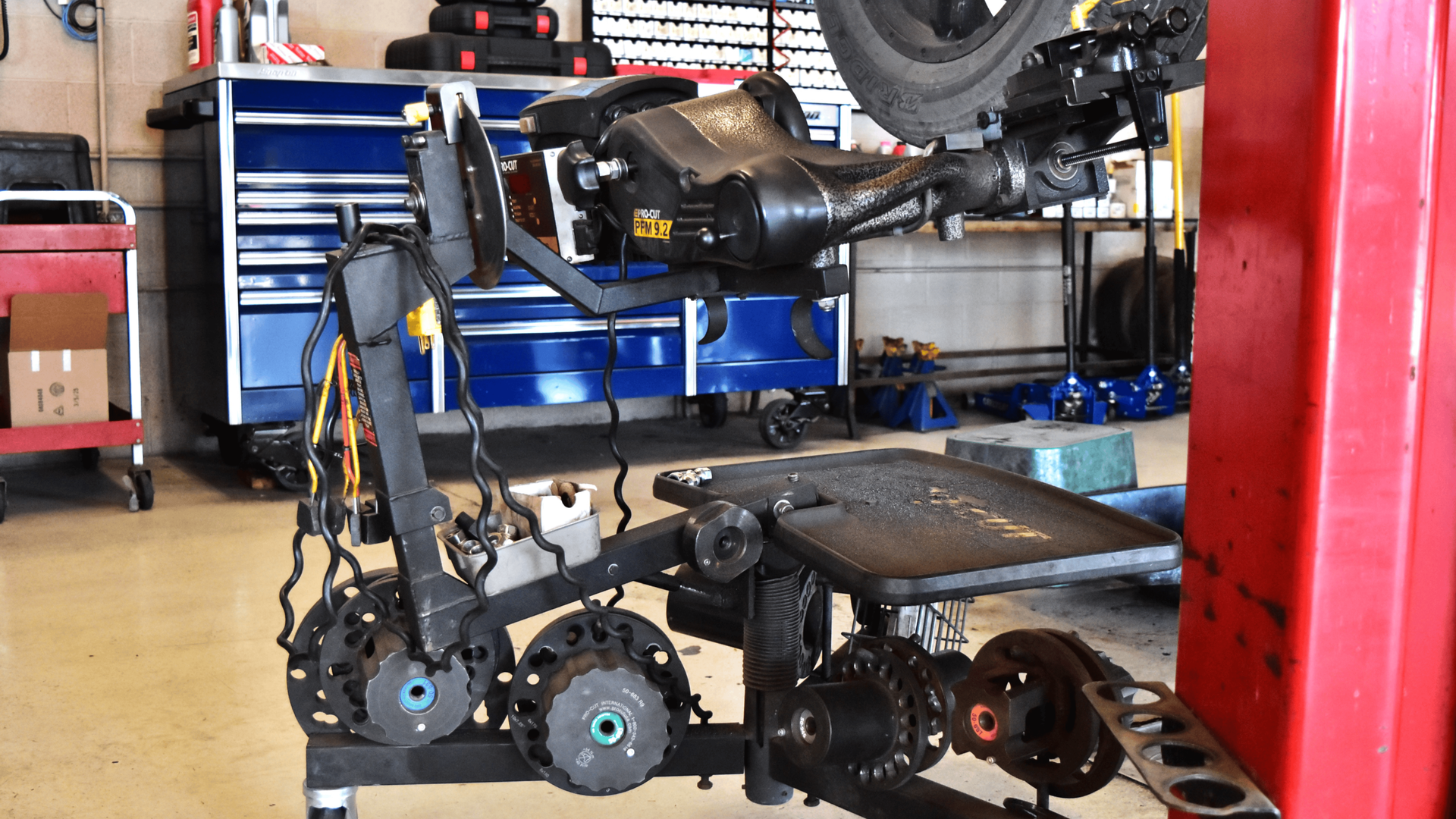
Restoring smooth stops and extending the life of your brakes through precision rotor machining.
Feeling a vibration, shaking, or pulsing when you press the brake pedal while coming to a stop? No, that isn’t normal – and it’s not just in your head. This is your vehicle communicating with you, and it’s often a clear warning that your braking system needs attention.
In Phoenix, your brakes work overtime to fight extreme heat, handle constant stop-and-go traffic, maintain control at higher speeds, and manage added strain from vehicle load and towing. Consistent stress can accelerate wear on key brake components like rotors and pads.
If you’ve ever searched “why does my car shake when I brake?”, this one’s for you.
The Root of the Vibration: Warped Rotors
To properly understand why your vehicle may be shaking, it helps to first understand the brake rotor. The rotor (also called a “disc”) is a circular metal component that spins along with your wheel as you drive. Rotors are a critical part of your braking system because when you press the brake pedal, the brake pads clamp down on the rotor surface to create the friction needed to slow and stop your vehicle. Without properly functioning rotors and brake components, your vehicle would not be able to brake safely or effectively.
Over time, Arizona’s extreme heat and demanding driving conditions can contribute to uneven wear on brake rotors. While they don’t typically “warp” in the way many people think, they can develop uneven thickness, heat spots, or surface variations that affect smooth contact with the brake pads.
When this happens, the brake pads no longer make consistent contact with the rotor surface. Instead, they may “grab” unevenly as they pass over these variations, which can cause your vehicle to shake, vibrate, or pulse when braking.
What is Rotor Resurfacing
If your rotors are uneven, there’s still hope for salvaging them. If there is enough metal left on the discs, we can perform a process called resurfacing (also known as machining or “turning”).
During this process, we use a high-precision machine called a brake lathe to carefully remove a very thin layer of metal from the rotor surface. As the lathe spins the rotor, a specialized cutting tool shaves the surface down evenly to restore a smooth finish – ultimately leveling out the “hills and valleys” (also known as uneven wear, heat spots, or minor variations in thickness) that develop over time from heat and normal driving conditions.
The Precision Process
Resurfacing rotors won’t work in every instance, which is why our technicians take a careful, technical approach to ensure safety. The process includes:
- Measuring: Before using the brake lathe, the first step is to measure the rotor’s thickness using a precision tool called a micrometer. This allows us to determine how much usable material remains and ensure the rotor is still above the manufacturer’s minimum discard thickness. If the rotor meets the required specifications, it can safely be resurfaced. If it’s too thin, resurfacing is no longer an option, and the rotor will need to be replaced to maintain safe braking performance.
- Machining: Given the rotor has enough life left, it is mounted on the lathe. The machine then removes a precise, minimal amount of metal from the surface to restore a smooth, even finish.
- Final Inspection: Once resurfaced, the rotor is checked for “runout”, which is a measurement that ensure it spins evenly with no wobble. It is then reinstalled on the vehicle and test-driven to confirm smooth, consistent braking performance.
How Precision Tire and Auto Center Can Help
At Precision Tire and Auto Center, our ASE-certified technicians have the experience and expertise to properly inspect, diagnose, and measure your brake rotors. When resurfacing is a safe option, it can be a more cost-effective and sustainable way to maintain your vehicle.
If your rotors are still within specifications, we use a precision brake lathe to restore a smooth, even surface. And if resurfacing isn’t the right solution, we’ll walk you through your options and recommend replacement when needed.
If your car shakes or vibrates when braking, it’s a sign your brake system may need attention. Trust Precision Tire and Auto Center to get the job done right and restore smooth, confident stopping.
Give us a call at 623-263-2331 to schedule your appointment today.