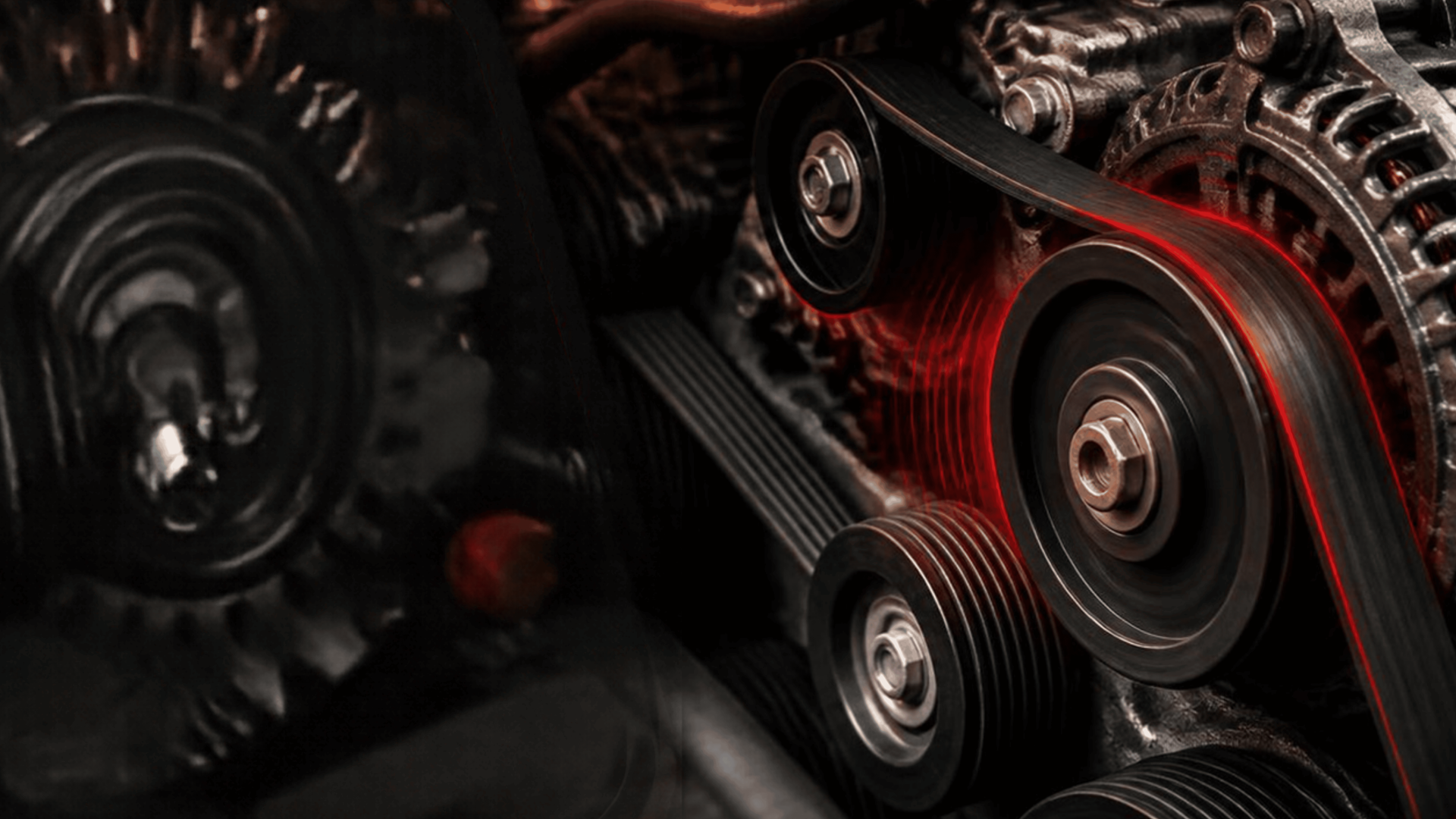
That loud squeal when you turn the key or push the start button can't be covered up by your morning soundtrack.
“REEEEEE”
Um… what was that?
You’re sitting in the driveway, getting ready to leave for work and your car just made an awful squealing noise right after starting your car. Maybe the noise gets quite enough to ignore, or maybe it disappears after a few seconds. Before you turn up your music and go on with your day, this is your reminder that your car needs some attention.
The Serpentine Belt
If your car starts screaming when you turn it on, the first culprit is often the serpentine belt.
The serpentine belt’s job is to transfer power from the engine’s crankshaft to accessories like the alternator, air conditioning compressor, water pump, and power steering pump, depending on the vehicle. These components begin operating as soon as the engine starts.
When the belt becomes worn, cracked, glazed, loose, or contaminated, it can start to slip against the pulleys when the engine first starts. This can lead to that high-pitched squeal you hear coming from under the hood.
Even if the noise ceases after a couple of minutes, that doesn’t mean everything is fine. Once the engine is running normally, the belt may stop slipping, causing the noise to disappear even though the underlying problem is still there.
What Else Could It Be?
While the serpentine belt is a common cause of squealing upon startup, it’s not the only thing that could be causing the noise. Several other components help keep the belt moving properly, including the belt tensioner, idler pulley, and accessory pulleys.
If one of these parts begins to wear out or fail, it can create noise as the belt moves. In this case, replacing the belt may not solve the problem. Additional diagnostics may be needed to determine which component is actually causing the noise.
Why Does It Only Happen Sometimes?
You may notice that squealing noise goes away after your car warms up. But why does it go away? Temperature, moisture, engine load, and the condition of the bely and pulley can all affect how noticeable the noise is.
Putting extra load on the vehicle like when the A/C is running or starting it after it’s been sitting a while can make the noises even more noticeable.
Don't Let a Squeal Become a Bigger Problem
Ignoring the squeal could lead to bigger issues, like a complete belt failure and the loss of important vehicle functions. Depending on your vehicle, a failed serpentine belt could affect the alternator, power steering, or water pump, potentially leaving you stranded or causing the engine to overheat.
If the squeal keeps coming back, gets louder, or lasts longer than usual, it’s worth having the belt and related components inspected before the problem gets worse.
At Precision Tire and Auto Center – AZ, we’ve seen our fair share of failing serpentine belts and surrounding components. Our ASE-certified technicians can help pinpoint the source of that noise and make the necessary repairs to keep your vehicle in top shape.
Give us a call today to schedule your appointment!